White Sage
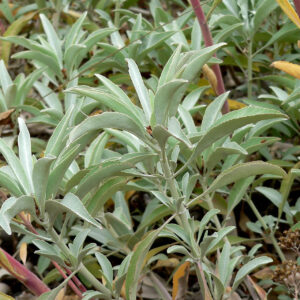
Photo of 'Salvia apiana at the Regional Parks Botanic Garden, taken July 2006 by User:Stan Shebs
White sage (Salvia apiana), also known as California white sage, is an aromatic plant native to southern California and Baja California. A member of the mint family, Lamiaceae, it is closely related to culinary sage but has a distinctive character of its own. Its use as a gin botanical can bring a strongly aromatic, herbal dimension to a spirit, particularly when used alongside juniper and citrus.
The leaves contain a range of volatile compounds responsible for their characteristic fragrance. In a gin, white sage can contribute pronounced herbal, resinous and slightly camphoraceous notes, with a dry, savoury quality that can add depth to the botanical profile. Used carefully, it can provide a fresh, almost eucalyptus-like lift, while also contributing a subtle earthy character.
White sage is particularly interesting for contemporary gins seeking a strong sense of place or a connection with North American botanicals. It can work well with citrus botanicals, where its aromatic freshness helps accentuate lemon, grapefruit or orange, and can complement juniper’s piney character without overwhelming it. Its herbal profile also has an affinity with other aromatic botanicals such as rosemary, thyme and angelica.
For distillers, the quantity and method of extraction are important. White sage is an assertive botanical, and excessive use can produce a spirit that is overly medicinal, resinous or bitter. Distillation allows the distiller to capture its more delicate aromatic compounds while controlling the heavier herbal character. The botanical can therefore be used as a supporting element rather than necessarily as a dominant flavour.
White sage also offers an opportunity to explore the diversity of Salvia species in gin. While common sage (Salvia officinalis) is familiar from culinary applications, S. apiana provides a quite different sensory profile and can give a gin a distinctive contemporary character.
For gin makers, white sage is therefore an intriguing botanical: aromatic, assertive and highly characterful, capable of adding freshness, complexity and a distinctive herbal signature when used with restraint.
| Latin name: | Salvia apiana |
| Origin: | Southern California and Baja California |
| Harvest time: | Generally harvested when the leaves are mature, typically during the warmer, drier months |
| How is it harvested: | Leaves and stems are harvested by hand, either from cultivated plants or, where permitted, from wild populations |
| Other uses: | Traditional ceremonial use, herbal preparations, aromatics and incense |