Mesquite Bean
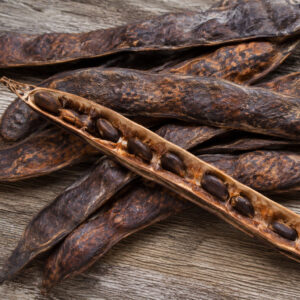
Mesquite bean is a distinctive botanical that can bring a strong sense of place to gin, particularly when used in spirits inspired by the landscapes of the American Southwest. Mesquite trees are widespread across arid and semi-arid regions of the southern United States and Mexico, and their seed pods have a long history of use as a food ingredient by Indigenous peoples and communities across the region.
The mature pods contain naturally occurring sugars, giving mesquite bean a characteristic sweet, nutty and toasted flavour. Depending on how it is prepared, it can also contribute notes reminiscent of caramel, vanilla, roasted grain and warm spice. This makes it an intriguing complement to the resinous, pine-like character of juniper.
For gin production, mesquite bean is particularly interesting when the pods are toasted before use. Toasting develops the natural sugars and intensifies the roasted and nutty characteristics, producing a botanical that can contribute considerable depth to the finished spirit. Used alongside citrus, spice and floral botanicals, mesquite can help create a richer and more rounded flavour profile.
Its character makes it especially suitable for contemporary gins that aim to express a particular geographical identity. Using mesquite sourced locally can provide a direct connection between the gin and the landscape in which it is produced.
Mesquite is an assertive ingredient, however, and careful dosing is important. Too much can push the profile towards heavy sweetness, roasted or woody flavours and potentially obscure the juniper. As with many unusual gin botanicals, small-scale trials can help determine the optimum balance and extraction method.
Mesquite bean demonstrates how gin can move beyond traditional European botanicals while retaining its essential juniper character. Its combination of sweetness, toast, nuttiness and regional identity makes it an especially interesting ingredient for distillers looking to create a gin with a distinctive American character.
| Latin name: | Prosopis spp. - several mesquite species produce edible pods |
| Origin: | Arid and semi-arid regions of the Americas, particularly the southwestern United States and Mexico |
| Harvest time: | Typically late summer to autumn, when the pods have matured and dried on the tree |
| How is it harvested: | Mature pods are generally collected by hand from trees, then dried and often toasted before use |
| Other uses: | Mesquite pods have traditionally been ground into flour or meal and used in food and beverages; mesquite wood is also widely used for cooking, smoking and charcoal production. |