


Myriam Hendrickx, De Kuyper Royal Distillers
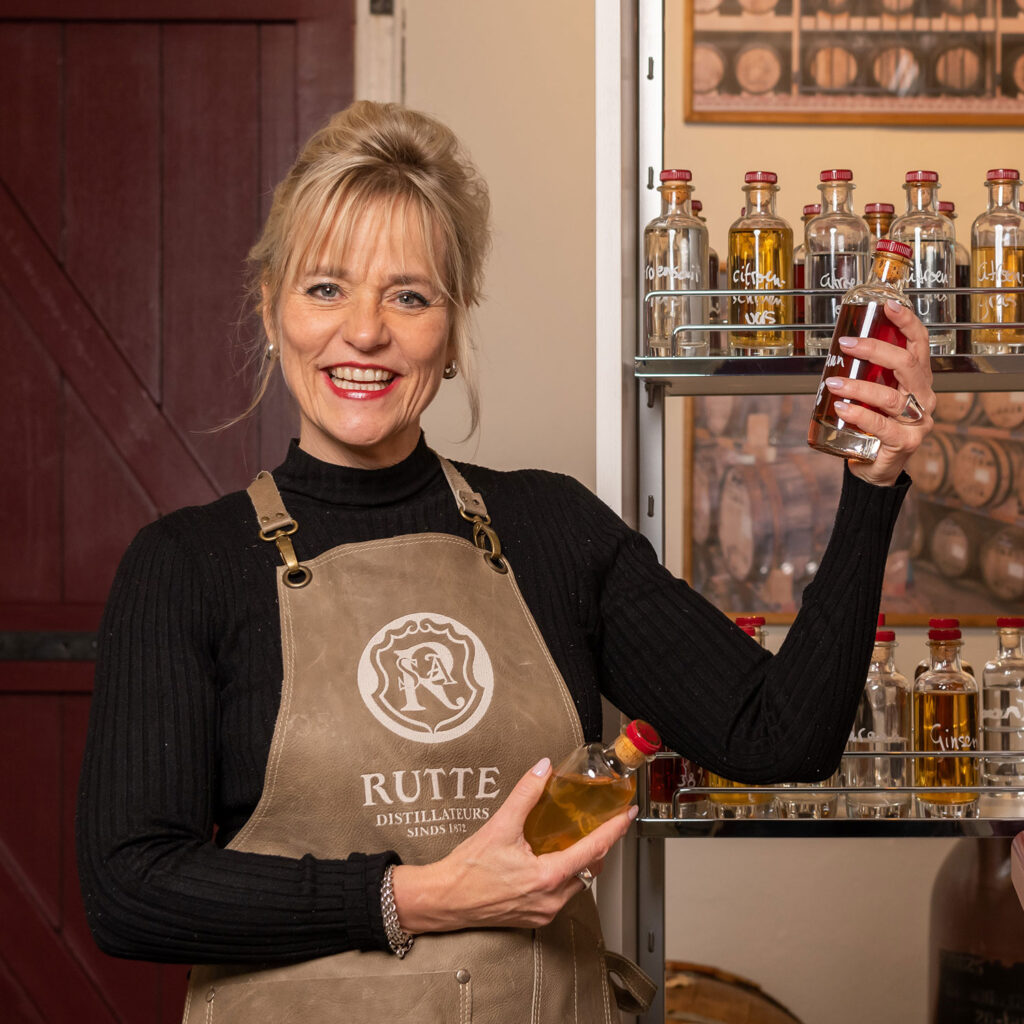
Ringing the changes at Rutte Distillery
When Myriam Hendrickx joined Rutte Distillery in 2003 she became part of a long line of master distillers to have played their part in its 150-year history, including seventh generation master distiller John Rutte, who at 70 years of age employed Myriam to assist him in his role.
However, a month into her new role John sadly passed away, leaving it to Myriam to preserve his legacy and assume the position of eighth generation master distiller – the first non-family member and first ever woman to have held the title.
A fusion of old and new
Little did Myriam know that it was the beginning of a transformative journey, as she explained: “Rutte is by far the most original distillery in the Netherlands – our methods and ingredients haven’t changed since the start of 1872.
“Tradition and craftsmanship are fundamental to who we are. We have gin recipes dating back to 1918 and still occupy the original building in the middle of the historic town of Dordrecht.”
She continued: “However, when I joined it was obvious that everything except our methods, recipes and ingredients needed to be modernised and refurbished to bring the organisation into the 21st century.
“This took years to accomplish, together with the help of my team in the early years, and then following our acquisition in 2011, with added assistance of our mother company, De Kuyper Royal Distillers – another historic family-owned Dutch company.”
A posthumous collaboration
Although the distillery has been brought up to date, Myriam and her team ensure that every new product retains a link with the past, as every generation has added something to its expansive portfolio depending on the trends of the era, be it the first gin, eau-de-vie, or the first barrel aged Genever.
This could be through the inclusion of a distillate they have been making for generations, or through a unique botanical typical of Rutte’s creativity, like celery leaves or carob beans.
One example of this is a 1918 recipe for Old Tom Gin, which contained lemon, cinnamon and ginger that Myriam and her team adapted by adding 7% malt spirit to produce a very gin like Genever hybrid that works wonderfully in cocktails.
The very first pot still the Rutte family ever used – Vulkaan (Volcano) 1 – was also retained and is still being used for small batches and testing.
Shared values
Perhaps somewhat unusually, Myriam’s background prior to joining Rutte was in food technology, as a qualified food engineer who specialised in dairy, offering training and consultancy services.
This required her to work with the spirits industry, which she immediately fell in love with due to the traditional craftsmanship and botanics involved.
Her admiration of old-fashioned skills and techniques is reflected in her respect for the Gin Guild.
She said:
“The Guild values and preserves the craftsmanship and skill in our beloved industry, which has a long and interesting past. It also plays a vital role in uniting businesses both big and small who all add something of value. It is good to share knowledge and build relationships.”
Finding harmony
Due to the wide range of products they make at Rutte, they have plenty of botanicals, distillates and infusions in-house, many of which are flavours that are unusual for gin distillation.
However, Myriam enjoys the challenge of making them work.
“I enjoy experimentation – taking ingredients and converting them into a new flavour combination is a very exciting process,” she said
“You have to know which flavours work together, so it’s about achieving balance and structure, and finding harmony in the recipe.
“I love the freedom I have to keep the ideas flowing, and value the opportunity to use the recipes created by the generations before me, while adding to the portfolio for those to follow.”
Nothing artificial
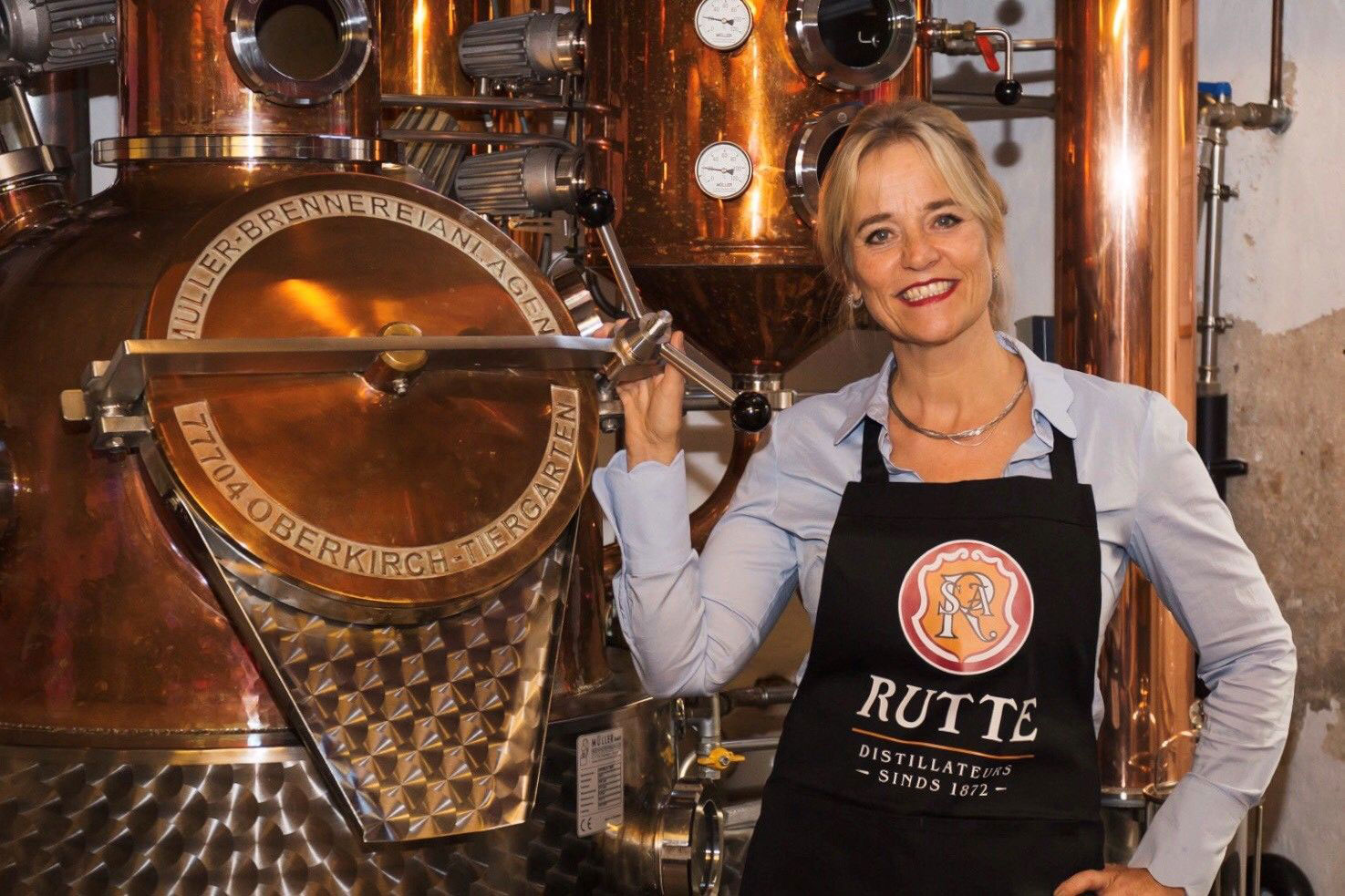
Everything is totally natural at Rutte, with everything produced from the botanicals Rutte distills and infuses in its Vulkaan 4 copper pot still, which was tailormade in 2013 by a German coppersmith.
Due to the complexity of some of the recipes, one product can involve multiple infusions and distillates.
The gins are distilled from pure grain alcohol, and they source their ingredients from suppliers who can ensure the very best products, so they use cinnamon from Sri Lanka and juniper berries from Italy. In keeping with their traditional ethos, the oranges and lemons are peeled manually.
The natural environment is a great strong source of inspiration for Myriam when she is developing new recipes, as she explained, “Nature offers a never-ending source of possibilities for the creation of new products.
“Last year for the Dutch market, we introduced a gin using kaffir lime leaves to create a fresh, Asian botanical element, in place of the more commonly used natural citrus.”
This is something Myriam believes will become much more commonplace in the future of gin distillation, “I think we’ll see more experimental fusions in the future, not only between categories but in flavour as well.”
While the future remains to be seen, what is certain is that Myriam, the first non-family member and first ever woman to have held the title of Master Distiller at Rutte in almost one and half centuries, will leave a legacy every bit as memorable as those who came before her.
For further information about Rutte Distillery please visit Rutte Distillery’s Page
Further reading

De Kuyper Royal Distillers
The Rutte family originally came from the south of Holland. They moved to Rotterdam in the 18th century. By the middle of that century they were already involved in the Read more

Rutte Dutch Dry Gin
This is a modern advancement of the much awarded Celery Gin. From the very beginning Simon Rutte and his sons experimented with unique botanicals, herbs and spices. The Dutch Dry Read more

Rutte Distillery
When they visit Rutte, visitors expect enormous stills, but they are, in fact, a lot smaller. The distillate that flows from the still is not the end product. The natural herb or fruit flavour is extremely concentrated which is why a distillate is a semi-finished product. Malt wine, grain alcohol, water and other distillates and tinctures are added to turn Read more